By Mats Moy. 8 minute read. Updated May 26, 2026
Acton Ontario real estate guide for 2026
Acton is the smaller, more affordable community within Halton Hills, typically priced 15 to 25% below Georgetown, with detached homes in the $800,000 to $900,000 range. It has its own GO station on the Kitchener line, a genuine small-town feel, and a lot less competition than Georgetown. Buyers who do not need to be close to the 400-series highways are finding real value here in 2026.
Most people searching for Halton Hills real estate end up looking at Georgetown. That is the larger town, the one with the busier GO station, the newer subdivisions, and most of the listings. Acton sits about 15 kilometres to the northwest and gets a fraction of the attention, which, if you are buying, is part of the appeal.
Acton is a genuine small town. About 10,000 to 12,000 people, a walkable downtown, a tannery history that dates back to the 1800s, and Fairy Lake right in the middle of it. The housing stock is older on average than Georgetown's, which means more character but also more things to inspect. Prices are lower, the competition is lighter, and the buyers who do show up tend to be deliberate rather than panicked.
The 2026 market has brought more activity to the whole Halton Hills area. Transaction volume across the municipality jumped 45% year over year in March 2026. Acton benefits from that same wave of returning buyers, but because it is smaller and less talked about, it tends to move a beat or two behind Georgetown, which means a bit more time to make decisions and a bit less pressure at offer night.
Acton home prices in 2026
Acton falls within TRREB's Halton Hills district, so the granular data for Acton specifically is not always broken out separately. The best way to read the Acton market is to start with Halton Hills-level data and then apply the Acton discount: historically 15 to 25% below Georgetown-area prices for comparable property types, driven by the longer commute, smaller amenity base, and lower name recognition.
The Halton Hills TRREB numbers for March 2026 give you the ceiling. Below, each line shows the Halton Hills average for March 2026 and the typical Acton range.
- Detached: Halton Hills average $980,469, typical Acton range $800,000 to $900,000
- Semi-detached: Halton Hills average $713,500, typical Acton range $600,000 to $700,000
- Townhouse: Halton Hills average $833,409, typical Acton range $620,000 to $720,000
- Condo townhouse: Halton Hills average $568,367, typical Acton range $430,000 to $530,000
Where Acton sits against the benchmark
The Halton Hills benchmark price, which strips out the month-to-month mix effect, was $1,003,800 in March 2026. Acton's comparable benchmark sits below that, in the $830,000 to $880,000 range depending on property type and street.
What that means practically: a buyer who gets priced out of a Georgetown detached at $980,000 can often find the same square footage on a larger lot in Acton for $840,000 to $870,000. The savings are real and they come without giving up the GO train.
What Acton is actually like to live in
Acton's nickname, "The Leathertown," comes from its past as a major leather and tannery centre, an industry that drove the town's growth through the late 1800s and into the 20th century. The industrial buildings are mostly gone now, but the bones of that era show up in the older brick homes and the compact downtown grid that does not look anything like the suburban streetscapes of newer GTA communities.
Fairy Lake is the centrepiece: a small lake right in town with a park, a walking trail, and the kind of scenery that shows up in every listing photo for homes within a few blocks of it. The Acton Arena runs minor hockey and skating year-round. There is a Sobeys and the standard collection of small-town services, but Acton does not have the restaurant or retail density of Georgetown. Residents typically drive to Georgetown or Guelph for anything beyond the basics.
The housing stock reflects the town's age. A significant portion of Acton's detached homes were built between the 1950s and 1990s: brick two-storeys on 40 to 60-foot lots, with the occasional century home closer to downtown. Newer subdivisions have been built on the east and north edges of town over the last 15 years, but Acton has not seen the same volume of new construction that Georgetown absorbed. That is part of why lot sizes tend to be more generous and prices stay lower.
Schools include Robert Little Public School, Acton Public School, and Acton District High School, a full secondary serving the community. Catholic families are served by Holy Cross Catholic School. Post-secondary, most students head to Guelph, Waterloo, or Brampton depending on their program.
Our work in Acton
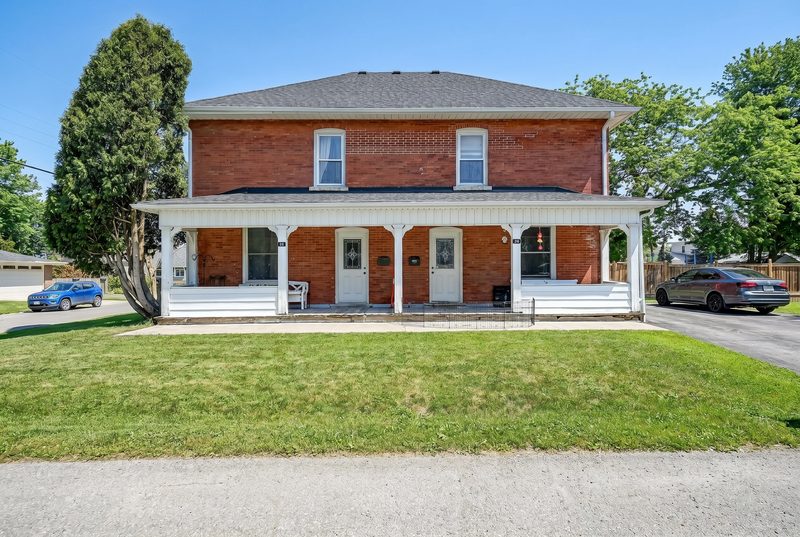
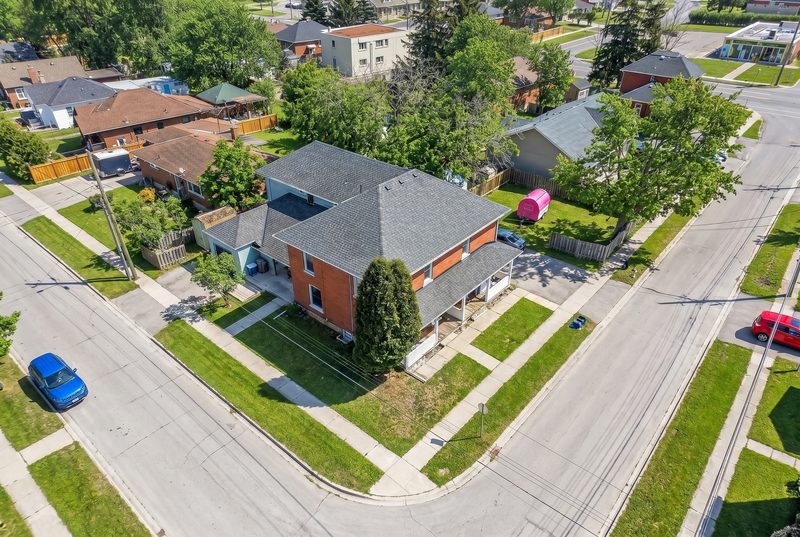
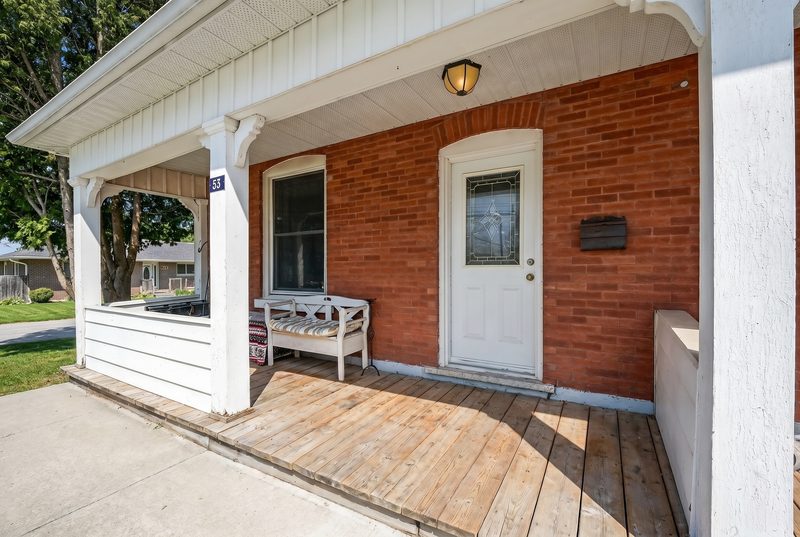
Photography from a listing marketed by our team.
Acton vs Georgetown: what is the real difference
The most common comparison buyers make when looking at Halton Hills is Acton vs Georgetown. Here is how they actually stack up.
- 01
Size and density
Georgetown has roughly 40,000 people versus Acton's 10,000 to 12,000. Georgetown feels like a busy suburb. Acton feels like a town. That is not a negative. It is a lifestyle difference that matters.
- 02
Price
Acton runs 15 to 25% below Georgetown for comparable properties. That gap has been fairly consistent over the past decade and it is driven by commute time and amenity availability, not by any meaningful quality-of-life difference for buyers who prefer a quieter setting.
- 03
Commute
Georgetown's GO station is busier and slightly faster to Union Station, roughly 65 to 75 minutes peak. Acton's GO station is on the same Kitchener line but adds 10 to 20 minutes to the trip, putting peak commute times at 80 to 100 minutes. If your employer is in Guelph, Kitchener, or Waterloo rather than Toronto, Acton is actually better positioned.
- 04
Amenities
Georgetown wins on restaurants, shopping, and services. Acton has the essentials but not the depth. Most Acton residents drive to Georgetown (15 minutes) or Guelph (20 minutes) for anything beyond everyday errands.
- 05
New construction
Georgetown has more of it and it runs expensive. Acton has less new inventory, which keeps prices lower but also means fewer options if you specifically want a new build.
- 06
Competition at offer
Georgetown listings routinely attract multiple offers. Acton is quieter: shorter bidding wars, more negotiating room, and more occasions where a clean offer at asking gets accepted.
The Acton commute
The right answer to the Acton vs Georgetown question depends entirely on whether the commute trade-off works for your situation. If it does, Acton gives you more house, more lot, and more money left over at the end of the transaction.
Acton sits on the GO Kitchener line, the same line that serves Georgetown, Brampton, and Bloor GO on the way to Union Station. The Acton GO station is at the north end of town and has parking. Peak-hour trains to Union Station take roughly 90 to 100 minutes depending on the schedule and stops. Georgetown is about 10 to 15 minutes faster on the same line.
Off-peak, the service thins out. Acton sees fewer trains per day than Georgetown, which means commuters who work non-standard hours or need flexibility are more dependent on a car. The 401 is accessible from Acton (about 10 minutes south), which opens up driving routes to Mississauga, Brampton, and the broader 400-series network.
For anyone whose workplace is in Guelph or the Waterloo Region, Acton is actually better placed than Georgetown. The drive to Guelph is roughly 20 to 25 minutes and avoids the congestion around the 401/400 interchanges that Georgetown commuters deal with going east.
The 401 access also makes Acton workable for buyers whose employers are in Cambridge, Kitchener, or Waterloo, markets where hybrid work has become standard and the daily drive is one or two days a week rather than five.
Who is buying in Acton
Acton attracts a specific type of buyer: someone who has done the math and decided that the GO commute to Toronto, or the drive to Guelph and Waterloo, is worth the savings compared to living closer in.
- 01
First-time buyers
First-time buyers show up here regularly, especially couples who need two bedrooms and a driveway but cannot stretch to Georgetown. The price floor in Acton, condos and semis starting in the $430,000 to $600,000 range, is still accessible without the 20% down that a Georgetown property at $900,000 requires.
- 02
Upsizers from Brampton and Mississauga
Upsizers are a consistent part of the Acton buyer pool. They are selling a semi in Brampton, pocketing the equity, and buying a four-bedroom detached in Acton for roughly the same net monthly payment. The lifestyle shift is significant.
- 03
Guelph and Waterloo commuters
This is a newer segment. As tech employment in the Waterloo Region has grown and remote work has stabilised at two or three days a week, the Acton value proposition has become stronger. The drive to Guelph keeps improving as Acton grows.
- 04
Retirees and downsizers
Retirees and downsizers buy here too, particularly from Georgetown. The smaller scale, the walkability of the downtown, and the Fairy Lake park are real draws. Bungalows in Acton do not get as much attention as Georgetown bungalows, so pricing tends to be softer, a positive for buyers in that category.
Is Acton a good real estate investment
The honest answer is that it is better than most people expect, for reasons that are not yet priced in.
Acton's price discount to Georgetown has been structural for decades, driven primarily by commute time. But two things are changing that equation. First, hybrid work has reduced the daily relevance of commute time for a large segment of buyers. If you are going downtown twice a week instead of five times, the difference between 70 and 95 minutes is much less important. Second, Halton Hills is growing, and Acton is the community with the most developable land and the lowest current price base.
Infrastructure investment follows density, and Halton Hills has been one of the faster-growing municipalities in Ontario. Acton's GO service has historically been limited compared to Georgetown, but GO Transit has been expanding Kitchener line service. Each frequency improvement narrows the gap between Acton and Georgetown commute quality.
The risk is that the price discount persists precisely because of the commute. If your investment thesis depends on Acton closing the gap with Georgetown, that is a long-term play, five to ten years minimum. As a hold for rental yield, Acton makes reasonable sense given lower purchase prices and stable rental demand from the Guelph and Halton Hills labour markets.
For buyers, the value case is simpler: you are buying at a 15 to 25% discount to a comparable Georgetown home, and the fundamentals driving that discount are softening. That is about as clear a positioning argument as you will find in the GTA right now.
Frequently asked questions
Is Acton part of Halton Hills?
Yes. Acton is one of the two main urban communities within the Town of Halton Hills, alongside Georgetown. They share the same municipality, property tax structure, and municipal services. For real estate purposes, listings in Acton are typically listed under Halton Hills in TRREB's district data.
How long is the GO train from Acton to Toronto?
Peak-hour trains from Acton GO station to Union Station take approximately 90 to 100 minutes. Georgetown is 10 to 20 minutes faster on the same line. Off-peak frequency is limited, so buyers who need commuting flexibility should check the current GO schedule before committing.
Are home prices in Acton lower than Georgetown?
Yes, consistently. Acton typically trades at a 15 to 25% discount to Georgetown for comparable property types. A detached home that would sell for $980,000 in Georgetown often sells for $820,000 to $860,000 in Acton. The gap is driven by commute time and the difference in amenity density, not by any meaningful difference in build quality or lot size. In fact, Acton lots tend to be larger.
What are property taxes like in Acton?
Acton falls under the Town of Halton Hills, which has a property tax rate of approximately 0.65 to 0.75% of assessed value. On an $850,000 home, that works out to roughly $5,500 to $6,400 per year in municipal taxes, plus the Halton Region and education levies. Your total tax bill will typically run about 1.0 to 1.1% of the assessed value when all three levels are combined.
What is Acton Ontario known for?
Acton has historically been known as "The Leathertown" due to its tannery and leather manufacturing history dating to the 1800s. Today it is known for Fairy Lake, its small-town downtown, and as one of the more affordable communities in the broader Halton Hills and GTA western corridor. It has a strong minor hockey and skating community centred around the Acton Arena.
Looking to buy in Acton or Halton Hills?
Browse the latest listings or book a 15-minute call to talk through the market and what your budget can actually get you here.